Saturday, May 24, 2008

Cold Sore From Impetigo

VIII and the rise of Nasr III

With the end of hostilities in Hungary and Italy, no one had the illusion that Europe would remain long in peace and all nations of the subcontinent were busy to prepare for the clash.
Yusuf died in 1804 and was succeeded by his son Nasr.

Fall of the Batavian Republic and declarations of independence
Also in 1804, the United Kingdom and Sweden decided, with the consent of the emperor, that was the time of the stadtholder Replace battery in its place. Thus, an Anglo-Swedish expeditionary force landed in the north of the republic, easily beating the troops Dutch, much of which was sent to fight the generals defected to the invaders and winning easily the major cities. Daendels fled, in turn, France.

The change in regime was more accepted in the colonies that in madrapatria, since the politics of Willem and his faction had always been in favor of the colonial economy, which the patricians had difficulty keeping at bay the natives during the Batavian
parentheses . An exception was the islands of Mindanao and Mindoro, where the presence of Dutch liberals were more established and it was a good harmony between settlers and the Philippines. Just the mestizo local governor, Cornelis de Rutguyr in 1805 declared that the domain of the United Provinces on the two islands had fallen and the population supported him in his rebellion. In addition, half of the fleet in the Dutch Indies was in Mindanao at the time and his admiral leaned de Rutguyr. The Republic of Mindanao, however, did not live long: in 1807, the Dutch government accepted the loss of two islands just to recover the 45 ships of the rebels. The solution came from Dick van Krol, internal opponent of the Liberal Party. His men eliminated the preceding chapters and most of the captains of vessels, with the death of the admiral, they opted to return to the fold.
order to prevent invasions, van Krol is "allied" with the HEEC, making sure his defense by granting privileges to the huge company. With your support, we Stadhouder appointed perpetual republic, which applied various policies extremist forbade religious worship, opened the economy to total free (except for monopolies English), gave equal rights to Filipinos, fortified the island and set up the lever.

At the same time, tensions were born in Congo. In the village, had formed two types of high society: the Dutch and native pro-Dutch, who behaved like the Europeans, whose children were often sent to study in Holland and was given to new and highly profitable economic activities for the country and another, more conservative and normally residing within. These were based mainly on their income and the slave trade Agriculture; Willem returned to power, the first instance he received was theirs, the restoration of traffic. As the only Africa and gained influence in the same year hit their regions, some aristocratic families started small outbreaks of rebellion, intended to expand.


The Nine Years War: the preparations
The ascent to the throne of Nasr, a man of culture-style martial, could not have come at a better time.
in 1802 had been the approach, dictated by political reasons, France and the Ottoman Empire, which had enabled him to strengthen its grip on Central, now even closer alliance with the likely France and Hungary with a renewed fighting spirit in Russia. On February 25, 1805 SRI, the United Provinces, United Kingdom and Sweden joined the Great Coalition. The incentive was given to the union by the news that the French army, now reorganized along the lines grenadine, was concentrating on the border. In fact, the French army and the grenadine were ready to invade the Netherlands and Germany, with the aim of undoing the uncomfortable gendarme of Europe. With this in mind
France had proposed to her two new allies go to war. The Ottoman Empire had now accepted because sights on Italy; Grand instead the idea pleased the Liberals chauvinists, who wanted a new colonial war, possibly against Sweden and Holland, however, the motion passed only through the votes of the emirs and kings.
France so prepared three armed easy to use: one, by 37,000 men, commanded by the Marquis de Grouchy, was to invade the Netherlands, one from 60000, led by Nicolas Soult, was to invade northern Alsace and from there march to Dortmund , the capital of Askanien. Others were 60,000 people of Osama bin Ibahim that their basis of Chaumont had invaded southern Alsace and then give support to Soult. 20,000 troops were landed at Genoa, to invade again, Piedmont and 4000 were supposed to land in Sardinia. Completing the deployment of the 10,000 Turks, mostly Italians, who had come first from Ferrara in Lombardy, and then in Veneto. Several other divisions were still ready to continue the invasion. The period

Torres.
The elections of 1804, after the previous had with a tiny turnout, sanctioned the large victory of the sons of Umar, the Liberal Party militarist, India, America, parts of Africa, Asia and Aragon . The following year, parliaments would have to send their representatives to Granada. Just got the results, members of liberal parties in each legislature proposed that the ministers and the Vizier should be re-elected or nominated by parliament and allow power to the king only with motions of no confidence. In the proposal, most Conservative MPs left the classroom with indignation, except for seven of the Colonial Party Boat. The proposal was the Minister of Interior, Nasr opposed the first vote, but seeing that even the Master of Toledo and the Emirates coast of Africa, Firanja and India had voted in favor, retired and accepted the veto, with 48% of Members absent. The vote in March 1804 gave a further blow to absolutism and led to the resignation of the majority of Conservative MPs. The following year, 70% of seats in the coalition Sons of Umar - Olives Progress gave all ministries except one to the Liberals. The new vizier was Jaume Torres, the son of a simple printer.

Torres had graduated in law in 1776. Member of various commission business in Africa, had an overwhelming political career and in 1793 became governor of Aragon, it is assumed also helped by his marriage to the daughter of the Master of Toledo. It was the perfect complement to a king who did not like going against the parliament and ministers. He was the deputy of the king during the war and the author of the hegemony of his party. As a first move, tried to take under the wing of Granada Mindanao, but its excessive demands caused him to lose the opportunity.
The beginning of the war.
the end, the war that led to massacres around the world starting March 7, 1805, when Grouchy crossed the border to invade Dutch Flanders. Two days later, and Osama bin Soult entered in Alsace. The Italian invasion, but was postponed because the weather prevented the passage of the mountains. Alsace was occupied without any battle but the advance was slowed by the logistics situation in France. The new logistics concept grenadine, in fact, provided little divisional deposits about 100 km from each other (with their distance expressed in the new metric system), which were following the troops as they moved, the other armies but continued to reliance on large deposits which set off huge files of wagons every day and Soult had miscalculated its position. This gave him time to amass the imperial troops.
seemed to go better in Flanders, where he defeated the defenders Rumst Grouchy and avoided their retreat in Antwerp, driving up in skirmishes with subsequent Zealand. He did however make the mistake of wanting at all costs the fortress of Sluis, reinforcing the division could safely hold on.
Given the stagnation in April 1805, Nasr, impatient Affairs, decided to take command of the invasion of Italian, which has recently become feasible. He left most of his tasks to Torres, who was now even more closely because Nasr had also recently married the youngest daughter of the Master of Toledo, in mid-April came in Liguria, where he gathered the troops scattered throughout the Piedmont region and entered into, thus giving the order to the regiment Luzzani to invade Sardinia and then the fleet bombarded Nice, April 18 was captured by the French. Adolfo d'Este, the Ottoman commander, he left and went to Mantua on April 20.
United Kingdom and Sweden still stalling.
The Battle of Rumst.

Ford Fiesta Getting Ipod To Work

The world at the turn of two centuries

China: Revolution and the war with Russia
Even China had started better. In 1796, in the mountains of Sichuan revolt broke out of the White Lotus, with the organization of the homonymous secret society. The revolt in 1804 only to be deleted.
In 1797, he was the city of Hangzhou to rebel, it is unknown if the involvement of the secret society or not.
In addition, in the same year, most of the Korean nobility gathered in the association's secret Taiji Free, but remained inactive for many years.

of 1798 was instead the brief clash with Russia: the settlers in Siberia came into conflict with the Chinese outpost on the southern coast of Baikal: the result was the total conquest of the region by the Russians. The adventurer Pavel Fyodorov led an expedition of 940 mercenaries entered the territory Manchu, who were joined by some disgruntled tribal leaders of the imperial government, the shipment, which arrived in 3000 men, headed south, with the aim of raiding as much as possible and then re-create an independent Manchu state, but was defeated by Chinese troops in Songyuan. Shortly after, the second Treaty of Nerchinsk established the new frontier, driven much more toward the Amur.

The new colonialist thrust.
the first to resume the expansion into Africa were the Dutch. Defeated in the north, even before the revolution began the colonization and subjugation of the south coast of the former territories, more or less peacefully, culminating in the Nama-Herero war of 1795-1798: the Herero were almost annihilated and absorbed the Dutch empire, while the Nama had to withdraw in the inner regions. In 1797 the Dutch fleet took some Pacific atolls.

In view of the approach to the southern tip of Africa, Britain saw its colonies in South Africa threatened. He allied with the Zulu and Xhosa, they determined the order of as an independent entity and was granted a buffer between Zimbabwe and the British territories. In the same way the Dutch, went up north, establishing the boundary of the lands claimed immediately over the Netherlands.
In those years were also founded settlements on the northeastern coast of New Guinea, while France monopolized the rest island. Between 1790 and 1820 he tripled the settlements in Australia and the Maori Wars led to the complete conquest of the north and a landing on the south. In 1801 Greenland was proclaimed a British soil, but without settlement.

France, as already mentioned, occupied the coast of New Guinea, and increased its presence in the islands already in its possession in Tahiti more sockets.

Sweden was limited to invade the kingdom of Hawaii and neighboring islands, as well as hunters and traders, thanks to establish some strong on the Hudson Bay and Alaska.


Gential Warts On The Lips

The first revolutionary wars

Control Act
In 1796, the French Parliament passed a decree that required the royal family to account for expenses and the parliament had the right to require cuts of up to 40% in case of needs. This, like most of the measures against the monarchy, was taken while the restless people of Paris threatened the royal palace.
Yusuf took advantage of a propaganda maneuver: he approve the Control Act, which required that all expenses of the royal family and nobles to publish the annual cost. But had no mention of any measures unenforceable by Parliament. This Act was widely publicized in the entire kingdom, which had constantly need the image of a charismatic king to stay glued. And, of course, much of the contemporary rulers was shocked in the face of this maneuver.


The war in Hungary In Hungary, in 1797, resumed with even greater force the riots: László Ferenczi, a cavalry officer, led the revolt that deposed and killed the king and proclaimed a republic József II. But before the new government could be organized, the Earl of Coburg was again sent to fight the insurgents, imagining a task as the previous one. László not had the support of the peasants, except Slovakia and Dalmatians who had promised independence, but he could almost count on full support for the bourgeois. The Hungarian army was initially defeated in Győr, but very little of Coburg and found himself to deal with supply lines disrupted by the resistance. In addition, in July 1797 Tsar Paul I, who had begun to open some liberal reforming the system of slavery, intervene to prevent a widening of the imperial sphere of influence. Tsar joined the Neapolitan King Ferrante, that he hoped to get some Adriatic port.
In 1798 the Ottoman Empire intervened on the eastern border, occupying several towns and villages as it did in France eight years ago. At the same time, the Russian army troops soundly defeated the Magyar-Germany unless Budapest. The Neapolitan fleet
instead defeated on June 5 in front of the German Split and laid siege to Trieste, with the subsequent addition of the Hungarian.
László Ferenczi portrait in 1799

The war in Italy
same year, around the north of Italy broke new rebellions. The army that was supposed to go to Hungary to reinforcement was diverted to Switzerland and went down in Italy. Taken after two days of siege Milan, other cities are quiet. However, in July, Rome and other cities of the Papal States rebelled, forcing the pope to flee to Naples. Since King Ferrante could hardly speak, wanting to rip the prerogatives that the pope had his ancestors, even though the Lutheran von Klisten took his men and marched south, leaving the Austrian reinforcements in Italy. In doing so, passed the Este duchy without asking for permission. Quickly became the first in southern Tuscany and then in New York, besieging Rome. At that point, knowing that threatened an invasion of their territories, Ferrante took the army and went to Rome, where, however, was defeated. But at that point, the Turkish army had already landed in Italy to answer that transgression and grenadine were again marching in the Monferrato.
With the voice that France was about to respond to aggression, as had long been in friendly relations with Hungary, the Emperor decided to ask for an armistice, withdrawing from Hungary and Rome. Russia and Napoli also retreated, while the Sublime Porte waited until 1799 to return the possession of the occupied.
In Hungary, the republic was established, which for the first four years would have been driven without elections.

Naples and the Two Sicilies
Ferrante, king liberal enough unlike his brother, he decided it was time to submit requests for the establishment and reform. In late 1798 established the Constituent Assembly and cut all ties with the French origins of the dynasty: in addition to definitively establish the name of the kingdom of the Two Sicilies (whereas before they were used both titling), changed the name of the dynasty in Sorrento, named the town where he was born.
However, at the beginning of 1799 gave the coup de grace to the Roman Republic, Rome and starving after assaulting Viterbo, the yield of the two main centers, restored the pope on the throne, having accepted a certain favoritism in treatment.

The purpose of slavery
ultimissini The years of the century also saw the abolishment of slavery in some countries.
The first was Britain, in 1796. He forbade the sale and possession of slaves, but to repay the owners imposed for the next three generations of slaves, a relationship of serfdom to the cultivated fields or employment, in cases of domestic slaves and for other tasks. It was then ripermessa in 1804 in the African colonies, where slaves were captured him, but their children could buy their freedom if they could. In the same way they acted, the Netherlands. France followed
in 1798: even with a big spending, abolished altogether and formed communities of enslaved blacks in various parts of the Americas, where they worked in activities regulated by the state. He was then prevented their emigration. Sweden
not abolished, but adjust the amount you have. In 1797, then abolished slavery in its possessions for the natives of Asia, where, however, was the forced deportation for criminals.


Add Hard Drive To Dish Network Vip222k

1792-1795: The era of repression and successes

The revolts in the Ottoman Empire
As feared, the seeds of revolt was also placed on the imperative of the Sublime Porte. The secret society revolutionary Sons of Liberty began the revolt in Greece, Serbia, Bulgaria and Croatia, but had little success. While the army suppressed to the west, the Caucasus and sull'Elbruz turkish-armed gangs began to fight the Persian rulers, the forces that had fought in Europe in 1792, were moved to the east in early '93. Faced with this shift, the Greek population took up the rebellion, this time blown up by taxes imposed on civilians and the repression. A new wheel followed by Serbia, Montenegro and Wallachia. The Empire did not have the strength to fight all those riots, which were expanded to the Peloponnese and from there in Apulia and Calabria. Granada intervened: the proposal submitted by the royal party, passed a very few votes. Again
Pesniz had command of the operations: with 6000 men and 90 guns first landed at Taranto, where he joined the army and defeated the rebels Neapolitan Italian. Then re-embarked and went to Greece, entering Attica and freeing the Turks besieged Athens. With the arrival of new recruits Anatolia, who had quelled the small uprising in Ionia, invaded Peloponnese, while an army from Istanbul through Macedonia and struck from the north. In the summer of 1793, the movements of the Greeks and Vlachs were blocked.

Pesniz was about to march on Montenegro, when it was learned that the Mamluks had taken the opportunity and had declared its independence, as well as the Bey of Tripoli. Impudently, Pesniz decided to embark immediately for Egypt, where he arrived in the hottest season. In addition to land in Alexandria, already in poor hygienic condition for the siege, attempted an unsuccessful sally, because his men were exhausted from the heat. The city fell shortly afterwards, and only half of the survivors managed to reach safety during the attack on the Mameluke, the Pesniz fell into the same flight. Faced with
quest'insuccesso (in November, the Egyptian army had invaded the Sinai) and the victory of Tripoline bey, Mustafa decided to grant large autonomy granted to the bey and Lower Egypt as a vassal state to the Mamluks, who retired Government outside the region

The riots in Hungary and Italy
Again in 1792, cities such as Milan, Bergamo, Venice, Treviso and Novara rose, the imperial army, however, easily eliminated the threat. Also the army, led by the Earl of Coburg, passed the Hungarian border in June, to suppress the independence of Slovakia Hungarian, while the king was engaged József II against the revolution in Pest.

The Batavian Republic
Even the Netherlands, which had a reputation for being fairly liberal, were spared. In June 1793, the rebellion broke out in Flanders. The provisional government established its headquarters in Flemish Ghent and asked the French intervention, but did not. In exchange, the general Daendels, who had been fighting against the French Revolution, passed on the other side, refusing to attack Flanders. With this refusal, in most Dutch cities stadtholder revolt broke out and fled to England. The new government, led by Pieter Vreede, however, escaped the German invasion, renewing all previously signed agreements, but by many reforms.

independence in the United Kingdom: the American war and the revolution of August
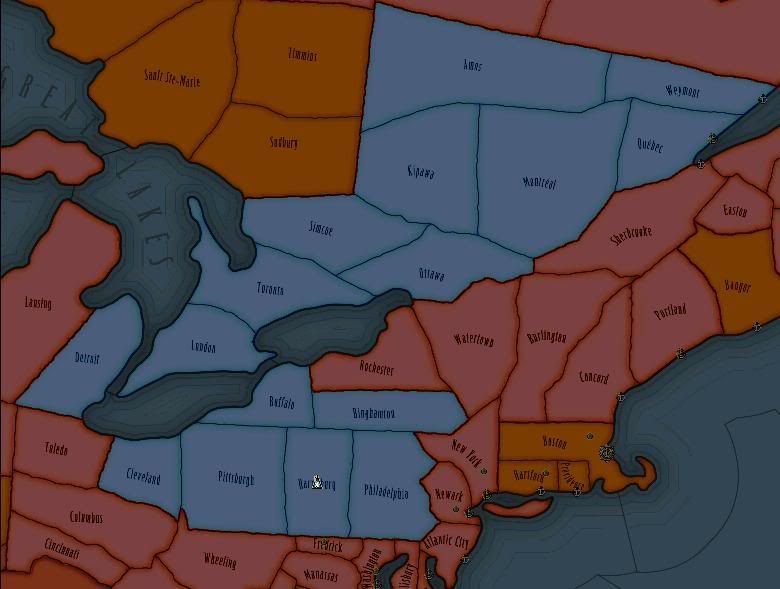
Already in 1791, part of the English colonies had been raised against the homeland, without which the colonial troops could fight effectively. The advent of the Batavian Republic brought new life to the insurgents, well supplied by the Dutch. In 1793 in Sandusky, the seat of the chief Wyandot (or Huron) Dunquat, was signed the Great Confederation, formed by the Huron and the Shawnee confederation, both of which include many other peoples clients.

When the raids began in the British territories, the British agents tried in every way spread of smallpox, but did not have great success. In fact since the beginning of 1700 was introduced in Europe 's ashi, a practice that served to Anatolian immunize children against the disease. In the 80 century, the Dutch doctors were able to convince other native leaders to introduce even among their tribes. The protagonist of this "immunization" was Pieter van Woensel: mandate for political purposes by his government, took the opportunity to study the nature of the Americas and, secretly, a clan of Ottawa used to test the diphtheria immunization, without success. However, the gangs began to attack with good results. The colonial government, engaged in suppressing the rebels of John Adams, offered the alliance with several tribes, mainly independent of the Ojibwe Wyandot. Their contribution, however, was minimal: 500 militants Dutch, who lived between the lands of the Great Confederation and British allies, and a thousand warriors set out on expedition Potawatomi, defeating the enemy warriors and burning villages. In one year, the territories were occupied by the Dutch settled there tripled and there are many mestizos born in previous years.

the American war fits the figure of Samuel Wolff, an Anglo-Iroquois mystic, politician and linguist. Judge of the county, state theorized a division between the peoples Algonquian (as Shawnee) and strain Iroquois (Like the Wyandot). Thanks to the fame gained in politics and as a linguist, of Harrisburg, the governor appointed him to the task of convincing Dunquat to abandon the alliance with the young Tecumseh. All that the fifty Wolffe got was the killing in a surprise attack in the village where he slept. It is said that he died trying to persuade the warriors to save the children, but in the way the federal government to make war Iroquois was already in use for some time: in fact they were caught only children but also young adults.

It was in 1794 that broke the rebellion in Ireland, like all others of the period. Munster and Connacht declared independence. With most of its resources committed in America, the repression was fierce: the rebels were beaten in Munster, but the king agreed to grant to the Connacht semi-autonomy, with their own parliament and some freedom. Colin Moore, the leader of the rebels of Munster, however, fled to America, where undercover reached settlements north of the Parana River, the border between the Guarani communities and independent Ireland and Great Britain.

The war between the federal government, the American rebels and joined the Batavian Republic lasted until 1795, when General Howe defeated Adams and signed the surrender of these United Colonies. Meanwhile, the Dutch had landed in the southern part of British territories on the Pacific coast, the current California and had been conquered by the Federal Government had expelled the English settlers from the north of the Gulf of St. Lawrence. With the defeat of the rebels broke a violent motion of distrust and persecution of all natives residing in English, except the Iroquois, many Indians, especially Cherokee, fled seeking asylum to Confederation. Peace was reached in 1796, when a regiment from the West Indies brought cheer to New York, from which it spread, hitting Europeans and natives alike. England recognized the achievements of the Dutch and the confederate and the first awarded as an area of \u200b\u200binfluence and colonization of a vast area south of Michigan.
borders after the peace of 1796

How To Make Tech Deck Ramp Out Of Books

changes

Madagascar and Vietnam: cooperation ex-grenadine continues
The foundation in 1784 of the Compagnie des Indes orientales françaises secured a stronger French economic presence in India and competitiveness against HEEC, which were guaranteed huge concessions on the British newly conquered territories. In 1786, the governors and Cossigny David de Damião de Goa agreed to an intervention in Madagascar: France would ally with the emerging Merina kingdom, and the center of the island was rapidly increasing its influence and would provide military assistance. Some of the Mascarene Islands, used as bases by the French fleet, would go to Granada in return for supplies to ground troops, who in about a year they managed to occupy the entire west coast of the island's allies Merina managed to unify the rest of the island in 1810.

The invasion of the kingdom of Dai Viet was supported logistically by Granada with less material compensation: England seemed determined to invade the lands of Granada in the south-east Asia and the Vietnamese king was coming dangerously close to the new: served a new European presence in the area to deter Britain from any colonial war. Also in 1786, from bases in Asia set off the French army that invaded the kingdom of Indochina in 1788 and defeated the defenders the battle of Battle of Rach Gam-Xoai mut, in which there was a strong contingent of volunteers from the Vietnamese Lao. With that battle won in spite of the suffering felt that French troops and the King Nguyen Hue, who had beaten a few days before Manchu army at Dong Da, the whole kingdom became a French protectorate with very limited powers.

Torture and paper money
In 1788, the requests of many men of culture led to the rejection of torture during interrogations, in conjunction with an increasing refinement of investigative techniques.
In the same year, the Board voted to issue banknotes. The reason for this reticence to adopt had been the alternate outcome of the case and the general fear that a simple economic invasion of the Inca Empire all'inflazionamento wore gold. At the end of the risks of paper money was accepted and in thirteen months, the mint made a million dinar paper, which financed the construction of new large fleet in the Mediterranean. The French Revolution


colonial Despite the successes in Asia and America, the French economic situation was dire: the cost of the wars were higher than revenues, stagnant trade, taxes oppress the Third Estate. The socio-political situation was in the same condition, with the absolutism opposed by the bourgeoisie and the general lack of confidence in the monarchy, who are unable to give vent to these tensions with incentives to colonization. In addition, January 29, 1789, King Philippe Auguste IV died after only two years of his reign, and was replaced by his brother Louis. In May, the instability was such that the king had to recall the previously ousted minister Necker, who had to work on new financial policy. A few days later, the Estates General were called, as promised by the king died, but not reached an agreement on taxes. In early June, the population of Vannes rose up against the duties on fish. At the end of the month, the conflicts took place between the king and the newly formed National Assembly. The news about what was happening came to Yusuf Mustafa IV and VIII, which They met in Barcelona. The sultan asked Yusuf to not allow a revolutionary movement would endanger a monarchy, alarmed by the fact that many intellectuals in his empire to the school was heavily influenced by French Enlightenment. The Nasrid still did not move, especially because it was quite in favor of a constitutional comes close. On 23 June, however, faced with the insistence of the covenant, did vote to send a military force across the border to keep order in the southern cities (the same day, two companies of French guards mutinied after the riots in Paris). The proposal was accepted and was ordered the resumption of effectiveness for the 3rd Infantry Division English dragoons and three regiments of artillery, when districts in northern Spain.
On July 5, General Pesniz went to Bordeaux. 6, against the wishes real, he proclaimed that he would march on Limoges if the National Assembly had not come to terms with the States General. A few days later, a Brigade assault took Arles, bumping against the garrison of the city and 13 camped just outside Marseille, and the fleet got under blockade the port of Toulon. Bordeaux 16
When he learned of the attack to the Bastille, a symbol of absolutism, the French nationality and most of the soldiers who were opposed to the invaders took up arms and attacked men Pesniz; 235 insurgents were killed and the general declared a state of siege. 22, the brigade captured Marseilles with the help of ships. On August 4, feudalism was abolished unilaterally and this news, Pesniz Diego sent the dragons on the way to Limoges, where they fought against some companies mutineers.
few days earlier, also the Netherlands and SRI had taken the measure of Granada, taking Liege, Charleroi, Luxembourg and Annecy. He trained in the areas occupied by such a liberation movement, the National Guard, which began to attack the occupation forces on a regular basis from mid-August. France was steering a middle course between the foreign invasions, revolutions and a monarch who had no credibility, almost besieged at Versailles. Louis XVI was receiving pressure from the brother, Gustav III of Sweden, who had adopted in 1772 a little-liberal-establishment by George III and his ally, for the acceptance of reforms who wanted to be introduced. On 5 October, a crowd went to the royal palace, carrying the newly drafted constitution and clashing with the guards. A week later, the king accepted the constitution, the most liberal in the world, then, and that took a lot of privileges to the aristocracy and clergy.

War of 1790
Fixed the constitutional issue, the following year Louis XVI asked for the return of occupied territories. Pesniz retired, but the Duke of Saxony, who commanded the imperial army and the Dutch General Daendels responded by joining forces and marched on Paris because the French king to retrace his steps.
The French army, from the pictures confused because many of the nobles had fled abroad in command, had difficulties in the beginning to mobilize. However, the general Dumouriez managed to intercept the allies to the village of Valmy, where the French artillery proved to be better: the shelling allowed his men to send 47,000 35,000 Germans routed the Dutch and 6000 with a frontal assault. The French army went, chasing the enemy from Luxembourg. When Dumouriez defeated again the Duke of Saxony and put it under siege in Charleroi, the truce was negotiated. France would get back all of its city workers.
Valmy

The revolutions of 1791, the war in Poland
The revolutionary ferment in Europe expanded. The first riots broke out in January 1791 in Bavaria, Thuringia and Lombardy. In May, King Stanisław II August, Poland, granted a liberal constitution, thereby entering into friction with neighbors. That same month, the heat came the British and French colonies: the colonists of New Hampshire, Virginia and Tennessee turned against DETACHED asking for the injunction, which winds up a couple of decades in the English colonies.
To the south, the rebellion spread among the slaves and natives of the French colonies, who founded the nation of Mexique, the name of the neighboring Aztecs. In September, despite the help of the Dutch, the French army suppressed the revolt, the kingdom could not afford to push for independence. Better
went to British colonies, which were longer independent.

The constitution of 3 May 1791 was not acceptable to many great Polish nobles, who, who joined the Confederation of Targowica, required the intervention of Russia. Although the intervention was not the Empire pledged to put down their riots, the Polish king was defeated by the Russians only once in 1792. He retired in Memel, from where it stood until March of 1793, then fled into exile in England. On the throne went to the head of the Polish confederation Szczęsny Stanisław Potocki.


Cute Grooming Sayings

Yusuf VIII: age changes

When Prince Yusuf was crowned king, already at a mature age, the Age of Enlightenment, in principle after nearly jumped Granada, was now entered in its own right in the history of Granada. His reign was punctuated by the news.

The plague of Sumatra and Malacca
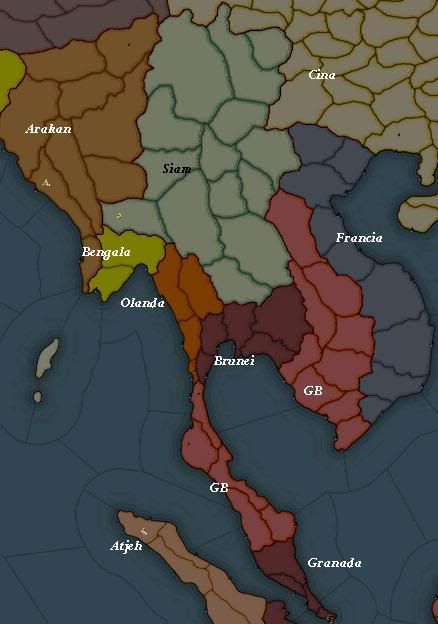
war of the same year of succession, a British fleet departed from the base of Cape Town and made a stop in the Dutch possessions in India. From there went back with the addition of the Dutch fleet. It was the surprise attack of the Netherlands and Great Britain against the weakened kingdom of Ayutthaya. In previous months, the Allies were added and the Lan Na Brunei. The Dutch army landed on the coast between Burma and the Malay Peninsula, the English on it. The armies of the Lan Na, which had consolidated its position by incorporating the Shan State after losing most of its territories in China, invaded from the north of Laos, after an easy occupation of Malacca, the troops of Lord Bullington went up north and joined those of Brunei, taking the northeastern coast of the kingdom, who went to the Sultanate. King Taksin of Lan Na Ayutthaya finally taken and destroyed, and the king fled to China Suriyamarin however, going to Cambodia and from there by the emperor, who, however, would not engage in any war.
With the annexation of the kingdom of Ayutthaya, Taksin proclaimed himself King of Siam and the British General proposed the invasion of Cambodia, divided into independent cities, or the Vietnamese faithful all'Ayutthaya: even in 1781 the region was annexed to the British Empire. This invasion of Granada
very worried, he did not want this new coalition in the area, so, when the Sultan of Johor (Malacca) showed too much friendship toward the British, 15,000 men he invaded the territory, as "strengthening border security and peace ". The Sultan accepted the submission without a fight.
But the Thai border with Granada convinced many to take refuge, followed by Cambodians. The governor made a big mistake, deporting all refugees on Sumatra: the crowding unsanitary conditions and did burst the bubonic plague, which expanded throughout the island, which fades only seven years later, when he had already invaded the islands.
The new borders after the Vietnam War in 1788

The economy and information
If outside the nucleus of the kingdom changed little in the economy, the inside was very done. The three bags that had previously existed, that of Granada, in Tunis and Kerala, were merged into the bag center of Granada, which allowed a better control over financial assets. At the same time, numerous statutes were revised in the workplace: they had many cities, often dating the Middle Ages. Wanting to encourage as much as possible companies, the government saw them all, with the support of the bourgeoisie, removing most of the guarantees to workers and halving times bureaucratic, and to secure the votes of the aristocrats were not affected the agricultural states. Despite this loss of rights and interests, the child laborers and artisans did not protest at first, because for centuries they had no need to use those statutes and they saw what would happen.
were then reorganized the tax classes: they became eight, including the first three did not pay the "fee for the defense."
In 1781, moreover, was founded the first newspaper in an eclectic character, the voice of truth. The government printed since 1648 a government announcement, which followed news of local government. In the 90 century started popping up independent newspapers, but always linked to limited areas. The Voice was the first newspaper that yes, it was based mainly on the Iberian Peninsula, but had big space for news from the rest of the kingdom and the world, opinion, and many other categories which are outside the record. 800 took the shape of modern, sharing in a major newspaper, coming out twice a month and a local daily.

The Constitution
constitutional ideas had already penetrated most of the ruling class of Granada, in response to the absolutist tendencies of Nasr II. Increasingly, groups of nobles and bourgeois, and spoke of it in the winter of 1783 in several cities were born real events that they asked. Yusuf then decided and put to the vote the proposal of a constitution, which was accepted. So a constituent assembly was formed in Zaragoza, who drew up the first two weeks in the constitution, that of Saragossa, in fact.

This constitution declared that al-Andalus was a sovereign nation and the umma and allowed them freedom of religion, association, speech and allowed the labor unions, but printing was still in theory open to criticism. Constitutionalized the division were in citizenship and the rights of ethnic minorities.
The second category of citizenship always voted according to the methods used, while the nobility of that class voted by following the instructions of the former, which were as follows:
-the right to vote was based on census: the first three classes did not pay the heavy tax on defense, but not Nor had this right;
-every seven years were devoted to the representatives of local parliaments, and these would no longer have power to elect their own representatives to himself, but every four years the same voters who said they would go to Granada;
- was allowed and even forced the association in political parties and factions to stand for election to the Council, or when we first appeared as tiny as individual candidates or factions both the local parliament and the Council. So mantendendo minor parliamentary divisions, the supreme chamber sides would present well defined and above transetnici;
-always to the Council, the seats would go to parties in proportion to the votes;
-king still retained the executive and legislative powers granted and guaranteed by prerogative and could dissolve the Council, as well as to prohibit certain parties, but his powers would stop this, because every other movement of power should have been voted;
-local parliaments could legislate in respect of their skills, but also had right to appeal to laws they did not like.

This constitution, though still lacks some things, like the ultimate separation of powers or the secular (not for the role of the sovereign), was very well received by his supporters and was a model for other constitutional experts in the world.
The mayor of Santander, who read the draft constitution to the Council

scandal courts
In 1783 the scandal came to light of some courts in the inner regions Saharan Africa, grenadine in theory by the law, had applied for many years the whole of the Sharia. Faced with this liberty taken by the judges, were created to ensure that the Special Commissioners more gifts and cultural ones, where not accepted in full by the central government.


Description Of A Person About The Hair

The era of Muhammad XVIII

Nasr II's death was sudden, in the hot summer of 1755. He was succeeded by his son thirty years old, Muhammad. Man cultured and refined, starting from his coronation would counter that sort of "crisis" cultural and scientific cooperation that had struck the kingdom of his two predecessors, represented by the ceremony in a huge canvas by the artist during Pioli. During his reign, supported many artists in search of a new cultural identity that attingesse to foreign models and under the patronage of his and a small circle of great nobles, in the 25 years when he was to the throne were founded two music colleges, 7 universities, 18 academies of arts, 22 academies of science, mathematics and natural. With a spirit that contemporaries called it "disturbingly secular, did not found any madrasa classical and even financed the establishment of private schools as alternatives to those based on religion, any religion. It was the first king of Granada to have such confidence in science.

's War Duala
Manikongo the death of the last, in 1759, William V of Orange proclaimed the annexation of the Congo, in response to conflicts arose among the nobles of the country for the succession. This annexation led to the creation of some local potentate subjected to the Netherlands, corresponding to the territories of the aristocratic families: this was largely welcomed.
was an African man who had always feared the raids of Duala on its territory, to Kribi, to convince the Dutch of the need for a war against its northern neighbor. Known
these maneuvers, the Duala leaders sought an alliance with the kingdom of Mandara, but they refused it. Then they turned to Granada: their conduct towards grenadine, despite the presence in their territory the homonymous city of Douala, founded by Yusuf Rurikovic, had always been ambiguous, partly independent, partly not. With the new threat, they came to offer their submission to Muhammad XVIII.

If the disaster was averted thanks to the vision was the new War Minister, Fernando Vaçol. He resisted at first instance to the new submission, but the opinion of the Ministry of Foreign Affairs and the Council were against, happy to have a new war with the Netherlands. With that, he ordered the recruitment of at least one division in Africa, not relying on the Guard Askia, too sparse for the region. However, in 1760 also, when already prepared several thousand Congolese soldiers and Dutch, only three regiments were ready for battle. Faced with such a slow pace, Vaçol got the redemption of less than a thousand slaves ready for sale, provided that contribute to defense of the colony. A
Duala was sent Moroccan general ar-Ribati, a commander of cavalry of classical training. His impression of the face of African military, which often break ranks and fight in open formation and walked barefoot, was that of a rabble, worse still was the auxiliary. However, his impression was justified.
In the dry season of 1761, 12,000 armed men, led by General Tjerk Tromp, departed from Kribi and began the arduous march to Duala. Malaria struck the advancing very quickly, nevertheless, in a short time the army had invaded the territory of Granada, easily took the smaller towns and laid siege to Duala and some strongholds in the vicinity.
beginning of the siege, the small squadron to intercept the first chance and Bioko Dutch convoy that was supposed to supply the besiegers, the loot was taken to the besieged city, which benefited from a long, but the Dutch fleet, with more ships and better armed, the enemy immediately brought back to the island's defenses. Soon after, he attempted bombing of the city, but was heavily damaged by shore batteries.
Meanwhile, various diseases may affect both sides and the assaults were reaping their victims. The greatest loss was on the Dutch contingent, not accustomed to the climate and trained under the old conception in which the soldier was prolongation of the musket, while the Congolese were using tactics more flexible.
In 1762 also, when the defenders were exhausted and on the fleet of Dutch ships Guinea drew away from the block, engaging and defeating and allowed the entry of many ships in port for refueling. Realizing that this stalemate of trenches and illnesses, broken only by the conquest of some strongholds outside, needed a decisive move, Tromp attempted the final assault, unleashing the full power of its guns against the battered city's defenses. Yet, it resisted. The soldiers who ar-Ribati contempt once again the value of defending the city with his teeth and resisting an attack by two days, which was often torn between the houses. The 19 (or 21) in February, the Congolese army decimated the Dutch raised the curtains and start the march him back to the south, only gain of the war was the total destruction of slavery ports of Granada, Duala excluded. In April, the peace was signed.
Yet, this experience served the Armed Forces Dutch first anchored to an old concept of the army, faced with the regular soldiers of the enemy learned a lot, but the Congolese soldiers, in the eyes of the general Dutch gained a new reputation, impressed by the results who had obtained.
Duala A war canoe used for travel during the siege. The flag is one of the governorate of Bioko.

The new French cooperation and the "blasphemous Romanization"
And with the new king's attitude towards the northern neighbors became more friendly. In the second ex-Aztec war 1763-1767, when France took much of the territory north of the border Aztecs, Granada won the directors of the Franco Territory of Tampico, a region separated for a few miles of the boundaries of two nations Mexico for most of the remainder, there was a deserted no man's land by war.
And, perhaps even behind the demands of the French king, defender of the Faith made a concession to the Pope allowed the sending of companies preaching was during his reign that many of the poorest people in Aragon, Castile and Leon returned Catholic. And Clement XIII, in 1767, canonized the first Iberian very long time, José de Calasanz.
This openness to Catholicism did not appeal to many nobles, especially the Berber area, so much so that flyers were printed satirical who spoke of the "blasphemous Romanization" and depicted the king praying before a crucifix. For the first time in decades, the king reapply press censorship.

Citizenship
The story of Husain ibn troops had already given rise to some problems, which are sharpened with the demands of the veterans of Duala.
Soldiers regular outside the nucleus of the kingdom, usually recruited among the poor and needy, seeking fortune in the army. If some, the service ended, they returned with their own people with their hoard, others often did not want to stay in the inferior position they had in their home communities, or however you want to settle where they were stationed, but legally had yet to respond to their people. The Minister of Interior in 1770 Hixota therefore proposed a change in the law, introducing the concept of citizenship, of course not forgetting that every inhabitant of the kingdom was first subject. The law approved included two classes of citizenship:

-First-class citizenship, which had all the subjects directly dependent on Granada. Garnets were to enforce the laws, pay taxes in the kingdom and had access to every theory of public office. With this citizenship, was also abolished the exemption of Jews from the lever;
-the second-class citizenship included the inhabitants of the "autonomous communities", "semi-independent populations," and so on. Those who had responded to this national law of its own people and then sottastava Granada agreed to all the traditional systems. You could not get the administration to high levels. However, with the people of noble women were allowed some people to vote together with their husbands for political representatives. It could, however

go from second to first, or through special services from the state or due to military service. After the stop, you could request to citizenship for himself and his family, as long as you move from the confines of the people. It was however possible to move from first to second if the reverse process had been carried by their grandparents. In order to prevent leakages of slaves, was inhibited their passing category.

The Industrial Revolution in the kingdom and the population boom
The second part of Muhammad's reign was marked by a commitment to making the craft more and more competitive. England, at the time the first country in this field, was a model and considerable sums were spent to ensure the introduction of numerous innovations English; in India were also put in place machinery for spinning much more efficient. It was founded on Scientific and Technical Club of Toledo, where they were invited many foreign scientists and inventors and the country were provided with incentives to those who wanted to start new businesses. In the meantime, the best living conditions and an unusually long period of relative peace, they increase the population in 25 years by 38%. However, Muhammad died in 1780, before the economic policy gave its ripe fruit.

Sudden Nausea Dizziness

Conflict and reform in the middle of the century

Towards a less and less power nobles.
Meanwhile, Nasr and his backers, continuing to work to increase the royal power status. In the edict of 1749, each province established that a proportion ranging from 1 / 5 to 2 / 3 of the representatives should be elected from among the city councils (also simply mayors), and mostly middle class. With this move also increased the political clout of the Arab and Iberian naturalized in other parts of the kingdom, because in many regions, they had ascended to the top of urban institutions. In this edict, France, after losing all Members of France and a border of Poitou, was reorganized: it was as to form and the provinces of Béarn-Armagnac-Pyrénées with four deputies and the Provence-Languedoc with 3.

The military expeditions of Jamal bin Husain.
The son of General Husain was the rising star of the army grenadine. At the age of 27 was placed in command of a brigade of troops assault. At 29, he commanded the expeditionary force in Crimea, and was repatriated before the move in Moldova due to the contraction of malaria.
occasions, in 1744 he was appointed head of the middle division (five regiments) Gujarati, taking part in the battle of Basra against the local sultan, who was defeated and became a vassal of the caliph (ten years after the death without heirs, it passed Basra under the direct control of the empire). Its
excellent conduct, he was appointed general of division, taking command of the 2nd Infantry Division Kannada.

In 1746, the division of the kingdom of Pegu and Arakan from Bengal, Delhi responded by declaring war.
Jamal was sent with his division to support the invasion of Mysore in Bengal, and which includes an Ottoman expeditionary force. Participated in the successful siege of Nellore, which ended on domain Bengali Telugu. To the north, the Sultan Adel defeated the army of Bengal and Arakan joint, forcing the sultan of Bengal asseragliarsi to Allahbad. Peace was signed when Jamal, transported by ships, had landed a few miles east of Cuttack, defense aids Pegu. More in the territory of Bangladesh, he was told that his division would be dissolved soon returned home. The news was not well received by his men, for most Dalits as untouchables and pulayar without a family who had tried their luck in the army and feared not to be placed in reserve. To this was added the announcement that it had no command substitution after the leave of the division.
Pending the fleet, was approached by Prince Tchin Jamal, commander of the garrison at Cuttack. Buddhist, he and his army had no sympathy in the Arakan or Bengal, the political action taken against the Buddhists in their homeland. Jamal proposed a deal: during the war had met several noble dissidents and were ready to rebel, they just need the help of an army that could defeat the loyalist forces. Jamal, tickled by the idea of \u200b\u200ba personal domain name, agreed. On January 27, 1747 left those who wished to return home, remaining with more than 6,000 men and with other leaders declaring the founding of the state of the two rivers, because it extended, in theory, from the Hoogly river Mahanadi. Right on the Hoogly based his operations center, Calcutta, which became yet strong military and a receptacle for Burmese refugees and Bengali. The forces of the new state council led by the nobles, defeated the Loyalists in the summer in 1747, driving them from their land and then combining their own. The following year was Sultan's army to be beaten then they asked for help to the Netherlands to put an end to the insurgency.
Since the meeting between Jamal and the fleet came to repatriate, the Navy had put grenadine blocking the ports of the rebels, the landing did not happen due to monetary problems. To remedy this poses the Netherlands, who landed 12,000 men, defeated one by one the nobles at the head of the state, malaria among the Dutch troops rescued Jamal and Calcutta for another year, finally had to give. The rebel general was handed over to Granada, who had him hanged. The Netherlands, as payment, he took a vast region between the coast and Cuttack, leaving the rest to the sultan, who made him feel his revenge. Opposed But the fire of Calcutta, who became a city used as a base by Dutch merchants.

The third war Rajput
The 1750 marked the union of Ajmer in Rajasthan and Udaipur in the person of Rama Singh, aristocratic elected king on the death without heirs of the above, by their peers, who were hoping for a major cultural force and policy against the rulers. Some gentlemen
dell'Ajmer, however, chose the namesake of the old king, Prithviraj, who was his brother. Faced with this opposition, in 1753 Rama asked to legitimize Nasr, but he refused. Driven by their constituents in 1754 proclaimed itself independent mahraja Granata, attacking and killing supporters of the rival.
Granada's response was delayed due to financial constraints and the fact that the Ministry of War had given the go-ahead to recruit a single division, mostly Sindhis, in the area. Without sufficient forces to attack, Rama Singh remained in his kingdom. The offensive came from Delhi, who feared the expansion of the Rajput rebellion among their own. And indeed it happened after the defeat of the army sent to suppress the reign of Rama Singh, other nobles joined him.
Granada had not sufficient funds to arm the soldiers nor the leverage to ask the local lords. Nasr then authorized the use of Shadows, the special body, which had been used in the Balkans to suppress outbreaks of rebellion in Africa and to remove any seditious elements. Captain Barre, sent to India with 400 men in 1755, conceived a daring plan: he knew that one day he would meet Rama in the city of Pushkar with other nobles to give a speech. Disguised as an Afghan merchant, with eighty-six men walked in that city. At the time of the meeting, the soldiers made way through the crowd and attacked their targets, killing many of the nobles and the king himself and injuring others. In flight from the city only two men managed to reach the border with Marwar, but the action was very important: who lost many of their leaders, many rebels surrendered to the army and remained grenadine and Delhi only a few pockets of resistance, which for 1756 had been destroyed, even by other coups of Shadows.
However, until the early 1800s, occasionally some lords of the region began to promptly isolated and uprisings.
Pushkar, where most of the leaders of Rajasthan was killed.