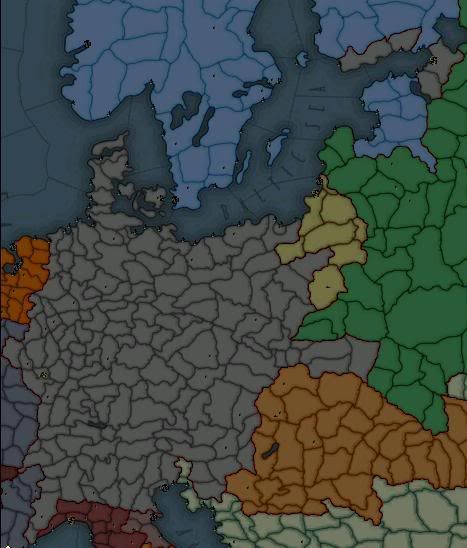
The maximum expansion of the two empires.
Naples and Rome in 1704, with the bull "non datur," Clement XI declared invalid the primacy of the kings of Bourbon-Anjou on the Papal States and its total independence from any foreign nation. Despite the threat of excommunication, King Robert V continued to threaten war, everything was resolved with the mediation of France, with the Two Sicilies, which renounced its claims on the state but won the Papal Marches.
The Americas after major outbreaks
is around the beginning of the eighteenth century that epidemics struck the European continent again American. These diseases had already opened the way for the Europeans in many parts of Asia, especially in the Caribbean and southern North America, where in practice the English settlers were replaced by the native population. The same fate had many tribes of the east coast of the continent. Virtually all South America was harassed by them, except the Inca Empire. In fact, since the 1500 Incas had ruled that the only contact with the outside should be with the merchants who had passed quarantine, after the diplomatic expedition to Tenochtitlan had talked about what was hitting the empire.
Even the Aztec Empire during the reign of Momoztli I experienced the destructiveness of the disease overseas. A half of 1500, typhoid and smallpox struck the Yucatan and then expanding along with other diseases throughout Central America. In Tlaxcala, and in all the cities of Lake Texcoco, the population was decimated by 90%. However, the Empire resisted, because the British were still involved in the colonization of land east of Mexico. This crisis, paradoxically, strengthened the absolute monarchy, because it eliminates a big chunk of Aztec nobility (however, when the royal family was one) and also that of the population is Nahuatl, the latter supported the huey tlatoani in its decision not to close the their markets to Europeans.
epidemics still not completely exterminated the people and slowly natives developed some immunity to infectious diseases and their impact in the following century it reached levels similar to those in Europe. However, these bacteria were an important weapon for the Aztecs when they fought against the Navajo and Apache, often forcing them to abandon their territories.
In North America only two tribes of any importance were able to resist disease and wars with the British: the Hurons and the Iroquois. The Iroquois in the war against the British were infected with smallpox through furs sold by the British in which they were wrapped patients. After about two years after the Iroquois accepted the British protectorate, with a certain independence, to prevent the attack of the enemy Hurons.
These more distant from the colonies, were hit almost immediately after the Iroquois, but the distance from the British and their federation with the Algonquins throughout 1600 to ensure the continuation of the gang war.
Ultimately, the early eighteenth century most of the Americas had been suffering from these diseases. |
|
| |


0 comments:
Post a Comment